how to optimize a website for AI search
How to Optimize a Website for AI Search in 2026
The way people search is changing.
A few years ago, someone might type a short keyword into Google, open several websites, compare the information, and make a decision.
Today, that same person may ask ChatGPT, Google AI Overviews, Google AI Mode, Perplexity, Gemini, or another AI-powered search system for a complete answer.
That creates a new question for website owners:
How do you optimize a website for AI search?
The answer is simpler than many SEO blogs make it sound. You need a website that search engines and AI systems can discover, understand, trust, and use as a useful source.
AI search does not replace SEO. In fact, Google’s latest guidance confirms that traditional SEO fundamentals remain important for its generative AI search experiences.
What Is AI Search Optimization?
AI search optimization is the process of improving a website so its information can be discovered, understood, and potentially referenced across AI-powered search experiences.
This includes platforms and experiences such as Google AI Overviews, Google AI Mode, ChatGPT, Perplexity, Gemini, and other AI-based discovery tools.
But there is a common mistake here.
AI search optimization is not about finding one secret AI ranking trick.
Start With Strong Technical SEO
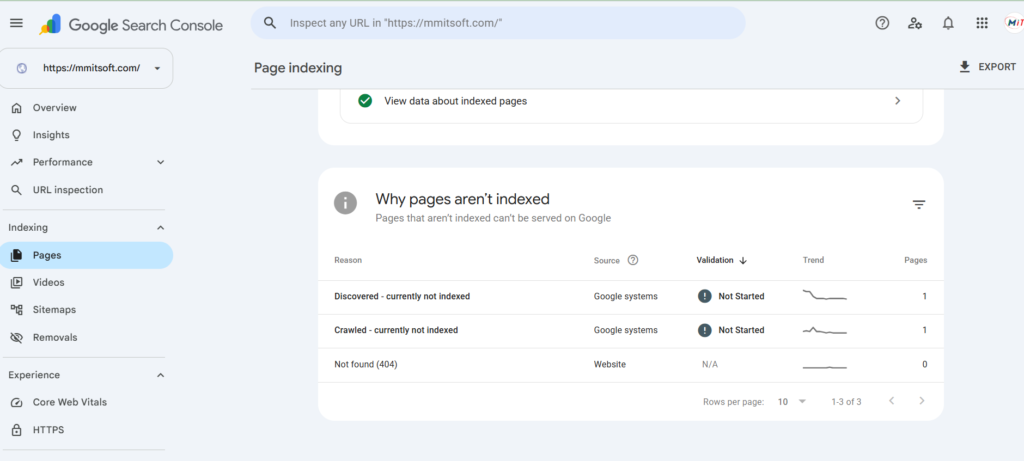
Before thinking about AI, check whether search engines can properly access your website.
If important pages cannot be crawled, indexed, or understood, there is little reason to expect strong visibility in AI search.
Check your:
- Indexing
- Internal links
- Canonical URLs
- Page speed
- Mobile experience
- JavaScript rendering
- XML sitemap
- HTTPS
- HTTP status codes
- Duplicate pages
- Crawlability
Google says pages generally need to be indexed and eligible to appear in normal Search to be eligible as supporting links in AI Overviews and AI Mode.
So don’t abandon technical SEO because AI search is growing.
Technical SEO is still the foundation.
Give Every Page a Clear Answer
This is where many websites can improve immediately.
Imagine a customer asking:
“How much does local SEO cost?”
If your page spends 500 words talking about your company before answering the question, the user has to work too hard.
Instead, answer the question early.
For example:
Local SEO pricing depends on the business location, competition, number of services, and the amount of work required. A basic local SEO campaign may focus on Google Business Profile optimization, local citations, technical SEO, content, reviews, and local authority.
Create Original Content, Not Rewritten Content
This is one of the biggest opportunities for SEO in the AI era.
AI can summarize information that already exists.
So why would an AI system or a user need another website that simply says the same thing?
Your content needs something original.
That could be:
- Your experience
- Your testing
- Your case studies
- Your own data
- Original examples
- Expert opinions
- Screenshots
- Real processes
- Lessons from client projects
- Industry observations
Google’s 2026 guidance specifically emphasizes unique, valuable, non-commodity content and encourages first-hand experience and original viewpoints.
This is where E-E-A-T becomes important.
Experience, Expertise, Authoritativeness, and Trust help communicate why someone should believe the information on your website.
Build Strong E-E-A-T Signals
AI search is not only about what you say.
It is also about whether your website provides reasons to trust what you say.
For a professional service website, strengthen your E-E-A-T with:
- A real author
- Detailed About page
- Professional experience
- Case studies
- Client results
- Reviews
- Clear contact information
- Business details
- Relevant credentials
- Expert-written content
- References to reliable sources
- Consistent information across the web
For example, if Abdul Malek writes about Local SEO, the website should clearly explain his SEO experience, areas of expertise, services, projects, and professional background.
That gives both users and search systems more context about the entity behind the content.
Make Your Website Easy to Understand
AI systems need context.
Your website should clearly communicate:
Who are you?
What do you offer?
Who do you serve?
Where do you operate?
What problems do you solve?
Why should people trust you?
This is where entity-focused SEO becomes valuable.
Keep your business name, services, locations, people, products, and important facts consistent across your website and other trusted platforms.
Use descriptive headings, logical page structures, internal links, and clear navigation.
Make Your Website Easy to Understand
AI systems need context.
Your website should clearly communicate:
Who are you?
What do you offer?
Who do you serve?
Where do you operate?
What problems do you solve?
Why should people trust you?
This is where entity-focused SEO becomes valuable.
Keep your business name, services, locations, people, products, and important facts consistent across your website and other trusted platforms.
Use descriptive headings, logical page structures, internal links, and clear navigation.
Optimize for Local and Multimodal Search
For local businesses, AI search is not limited to text.
People may search for businesses using maps, images, videos, reviews, business profiles, and conversational questions.
Keep your:
- Google Business Profile
- Business name
- Address
- Phone number
- Opening hours
- Services
- Website
- Reviews
- Photos
- Videos
accurate and consistent.
Google’s guidance also recommends supporting textual content with high-quality images and videos and keeping Business Profile information updated.
Measure AI Search Visibility
SEO measurement is also changing.
Don’t only look at traditional keyword rankings.
Track:
- Organic traffic
- Leads
- Calls
- Form submissions
- Local visibility
- Branded searches
- Search impressions
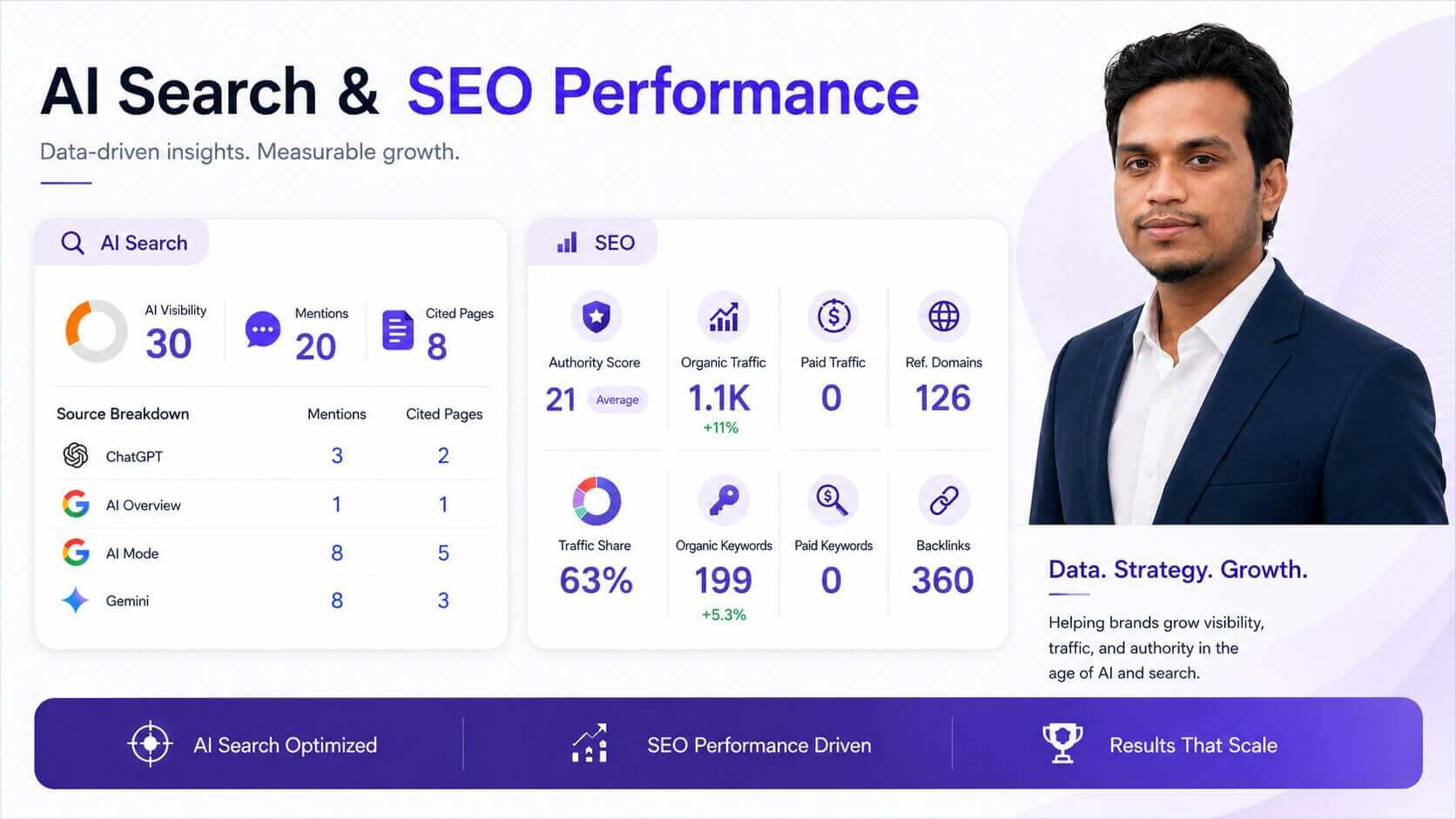
- AI visibility where measurable
- Referral traffic
- Conversion rate
Google introduced dedicated Search Generative AI performance reporting in Search Console in 2026, including visibility from generative AI features such as AI Overviews and AI Mode, with the reporting initially rolling out to a subset of websites.
Don't Try to “Write for AI”
This may be the most important lesson.
You don’t need to make your writing unnatural so an AI can understand it.
You don’t need to repeat the same keyword 50 times.
You don’t need to create hundreds of tiny pages.
You don’t need to add a special “AI SEO” schema.
You don’t need to rewrite every paragraph into robotic bullet points.
Instead, write for people.
Give direct answers.
Add original knowledge.
Show real experience.
Make important information easy to find.
Build authority.
Keep your technical SEO strong.
Google’s latest guidance makes this point clearly: there is no special way you need to rewrite content specifically for generative AI, and there is no ideal page length for AI search.
AI search is changing how people discover information, but the fundamentals of good SEO are becoming more important, not less.
A strong website should be technically accessible, easy to understand, useful to real people, supported by genuine expertise, and connected to a trustworthy business or person.
Think beyond ranking one keyword.
Build a website that can answer questions, demonstrate experience, earn trust, and become a useful source across the modern search ecosystem.
That is the real goal of AI search optimization.
And if you are asking how to optimize a website for AI search, start with the fundamentals: technical SEO, helpful content, clear answers, strong internal linking, E-E-A-T, entity clarity, local signals where relevant, and continuous measurement.
Frequently Asked Questions
Straight answers to the questions I am asked most often about SEO in Bangladesh.
How do you optimize a website for AI search?
To optimize a website for AI search, start with strong technical SEO, clear website structure, helpful original content, direct answers, internal links, and strong trust signals. Make sure important pages can be crawled and indexed, explain your expertise clearly, and support important claims with evidence. For local businesses, also keep Business Profile and business information accurate and consistent.
Does SEO still matter for AI search?
Yes, SEO still matters for AI search. Google’s current guidance explains that AI Overviews and AI Mode are built on core Search systems and use relevant information from the Search index. Technical accessibility, useful content, internal links, page experience, and other established SEO practices therefore remain important for visibility in generative search experiences.
How can I optimize my website for ChatGPT?
Start by making your website useful, accessible, clear, and trustworthy rather than trying to find a special ChatGPT ranking trick. Publish original information, demonstrate expertise, explain your business clearly, maintain strong technical SEO, and build genuine authority across the web. Your goal should be to become a useful and credible source for questions related to your expertise.
What is the difference between AEO and GEO?
AEO usually means Answer Engine Optimization, while GEO commonly means Generative Engine Optimization. Both describe strategies designed around visibility in answer-based or generative search experiences. However, they should not be treated as replacements for SEO. Strong technical SEO, useful content, clear answers, authority, and trust remain important foundations for modern search visibility.
Does E-E-A-T help with AI search?
E-E-A-T can strengthen the trust and quality signals around your website, although it should not be treated as a single AI ranking factor. Demonstrating first-hand experience, expertise, authority, and trust makes content more useful and credible. Original examples, case studies, author information, accurate business details, and evidence can help demonstrate why users should trust your information.
Do I need special schema for AI Overviews?
No. Google says there is no special structured data or schema required specifically to appear in AI Overviews or AI Mode. Structured data can still be useful as part of normal SEO and search features, but it should accurately match visible page content. Focus first on crawlability, indexing, useful content, clear structure, and a strong user experience.
Should I create an llms.txt file for AI SEO?
You do not need an llms.txt file to appear in Google’s AI search features. Google’s current documentation says Google Search ignores llms.txt for its search visibility. Some other systems may use similar files, but they should not become the center of your SEO strategy. Focus your effort on technical SEO, original content, authority, clear information, and user value.
How do I get my website into Google AI Overviews?
There is no guaranteed submission or special optimization that automatically places a website in AI Overviews. Your page needs to meet Google’s normal technical requirements and be eligible to appear in Search. Strong SEO fundamentals, useful original content, clear answers, and relevant information can improve your overall search visibility, but inclusion in AI features is not guaranteed.
How should I write content for AI search?
Write content primarily for people, not for an AI algorithm. Start important sections with direct answers, then provide useful explanation, examples, evidence, and original insights. Use clear headings and logical organization. Cover the questions your audience genuinely has without creating unnecessary pages for every keyword variation. Quality, relevance, originality, and trust are more important than forcing a specific writing formula.